Robotic Spinal Decompression, Explained Simply
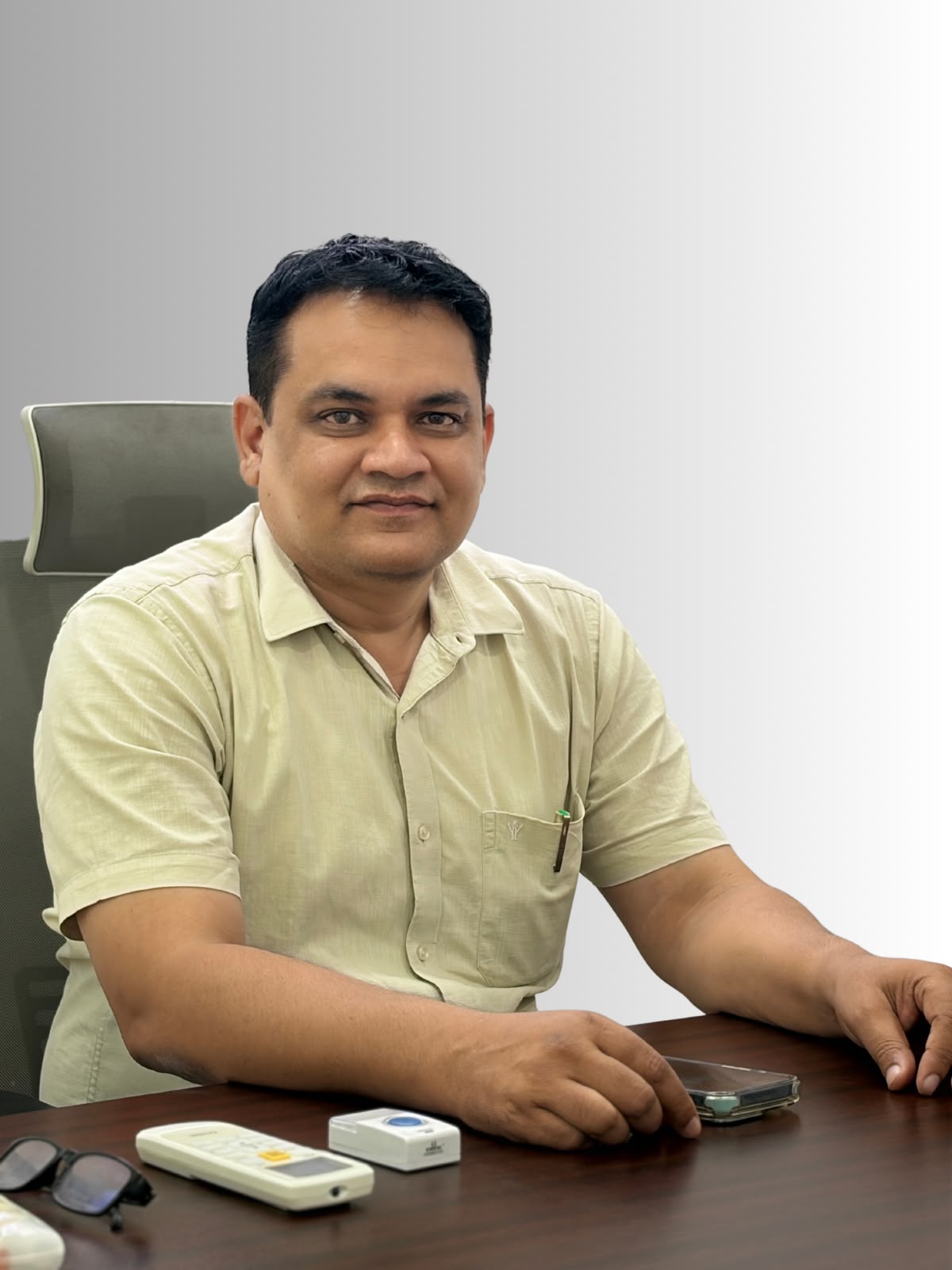
What the RoboSpine-100 actually does, why the robotic part matters, and what a real session feels like from start to finish.
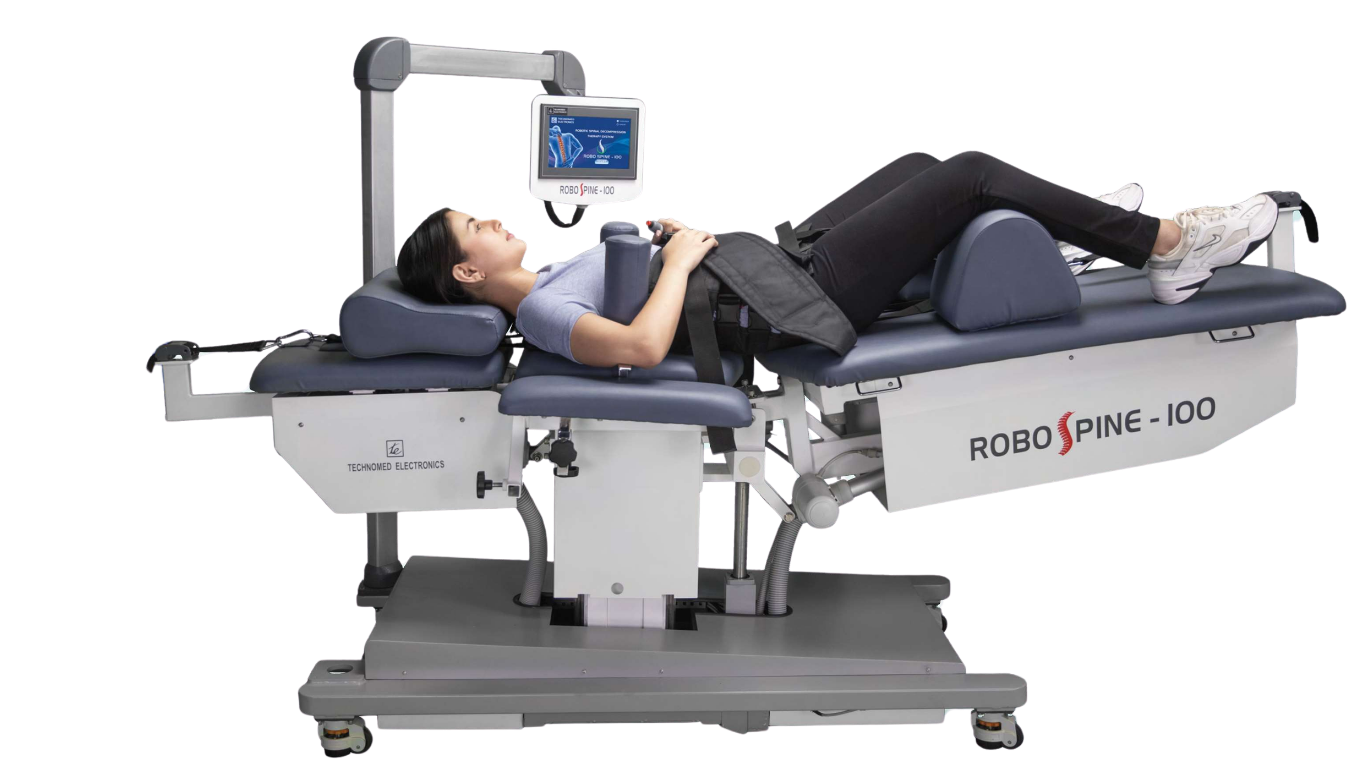
Spinal decompression has been used for decades. What is new is the precision. Older traction machines pulled the whole spine with a fixed weight and hoped for the best. Robotic decompression measures, targets, and adjusts in real time — which is why it can reach the one segment that matters without straining the rest of your back.
What robotic really changes
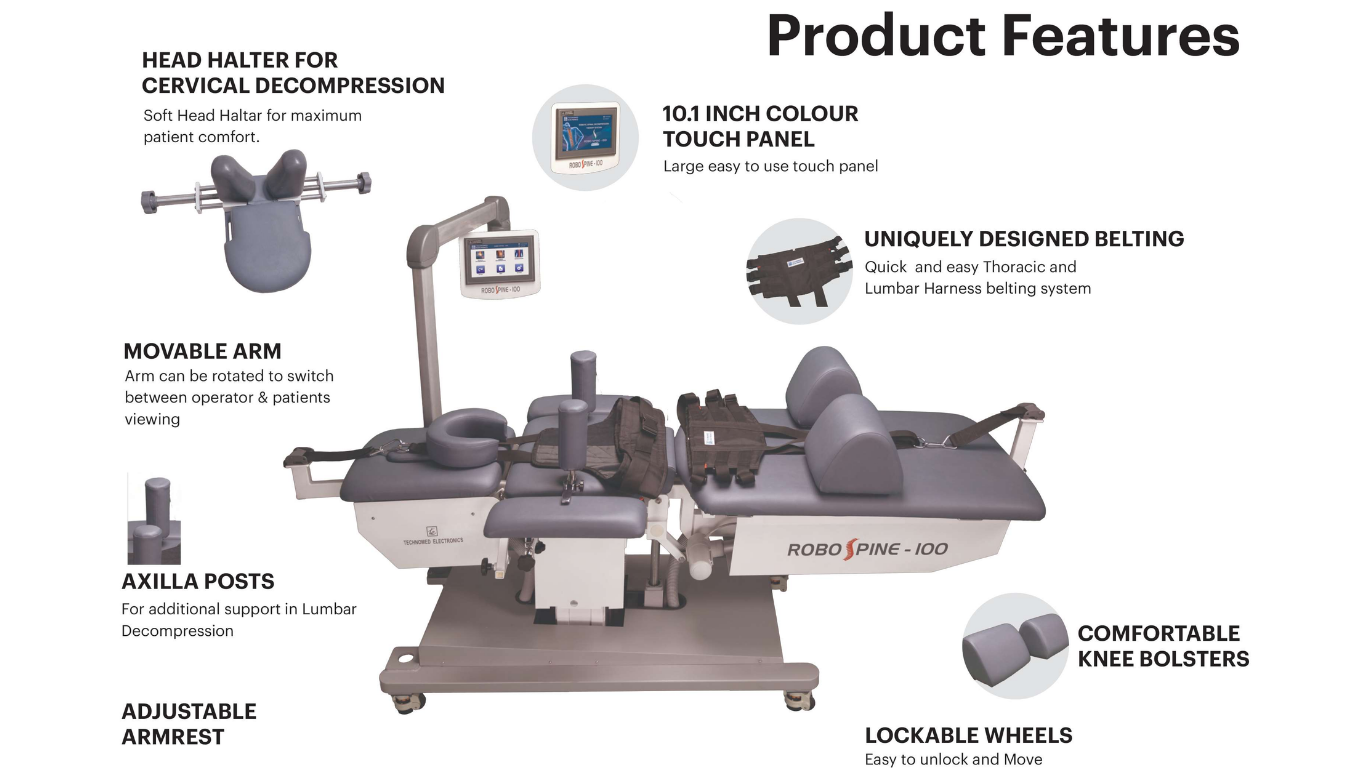
The RoboSpine-100 reads how your body responds and modulates the pull cycle accordingly. This matters more than it sounds. Push too hard and the muscles instinctively fight back, guarding the spine and cancelling out the stretch — so the disc never actually opens. The machine works just below that guarding threshold, holds, releases, and repeats. That rhythm is what creates real space between the vertebrae.
The science of creating space
When a segment is gently pulled apart, pressure inside the disc drops. That negative pressure does two useful things: it gives a bulging disc room to draw back in, and it pulls water and nutrients into a disc that has been starved of them. Discs have almost no blood supply of their own, so this pumping action is one of the few ways to actively nourish them.
A session, step by step
- You are positioned and gently secured — fully clothed, lying down
- The system applies a slow pull-and-release cycle for 15 to 25 minutes
- You feel a comfortable stretch, never a jolt
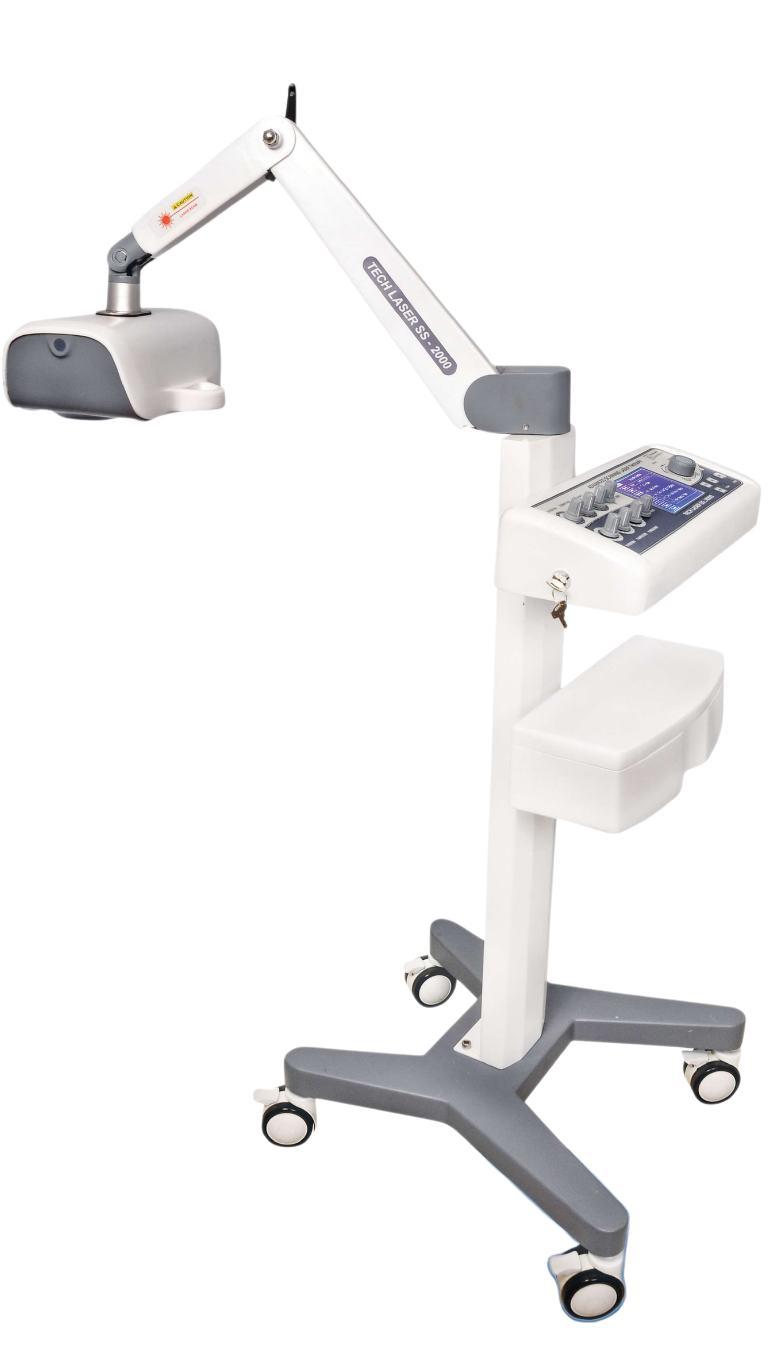
- Most people add laser therapy or guided exercise the same visit
- You get up, and go about your day as normal
“Precision is the whole point. We are not stretching your back — we are opening one specific segment, by design.”
Who it helps most
Robotic decompression is especially effective for disc bulges and herniations, sciatica, and the stiff, compressed feeling that builds from years of sitting. It is not the right tool for every problem, which is why we assess first. A typical course runs across several sessions, and your physiotherapist tracks range of movement, pain, and function at each visit, adjusting the protocol as you improve.
Frequently asked questions
How is this different from a normal traction machine?
Traditional traction applies one fixed force to the whole spine. Robotic decompression targets a specific segment and continuously adjusts force and angle in real time, staying below the point where your muscles resist — so it actually opens the disc space.
Is it safe?
Yes, when it follows a proper assessment. We check that decompression is right for your specific condition before starting, and the force is always gentle and controlled.
Can I combine it with other treatment?
Yes — most patients get the best results combining decompression with laser therapy and a short exercise programme.
Consultant Physiotherapist at Vasavi Robospine, MVP Colony, Visakhapatnam. Leading non-surgical, robotic spine and laser therapy care.
In pain? Get a personal assessment.
We map the cause of your pain first, then build a non-surgical plan around it. Book a consultation today.
Book on WhatsApp